category2 posts
Miri Programming Language
Miri is a GPU-first programming language I'm building from scratch in Rust. The idea started as a pipe dream back in 2017—a language as fast as C++ but as pleasant to write as Ruby. Years later, the rise of LLMs and GPU-dominated computing gave the project a new purpose: a language designed for a world where AI generates most of the code and GPUs are the default execution target.
This series documents the entire journey—from compiler architecture decisions and type system design, to memory safety, concurrency models, and making GPU a first-class citizen in a programming language. Follow along as I build, learn, and share everything openly.
001 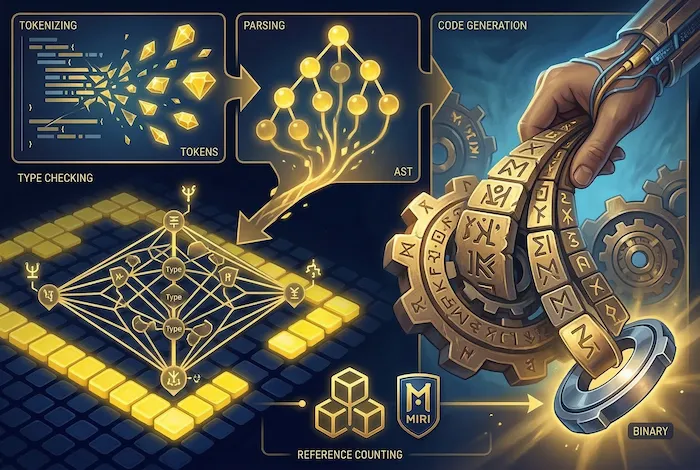 How Miri’s Compiler Works: From Source Code to Native Binary How Miri turns source code into a native binary — lexing, parsing, type checking, MIR lowering and code generation with Cranelift, explained end to... Miri → 002
 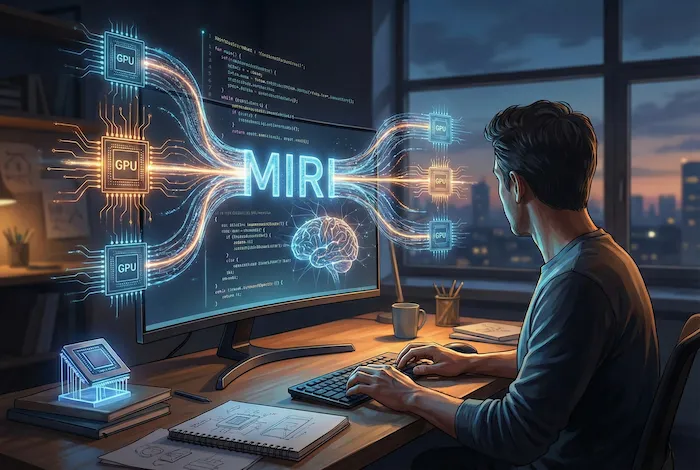 Why I’m Building a GPU-First Programming Language in 2026 The origin story of Miri, a GPU-first programming language built for the AI era — why I chose Rust, and how LLMs changed what a solo compiler proje... Miri →
How Miri’s Compiler Works: From Source Code to Native Binary How Miri turns source code into a native binary — lexing, parsing, type checking, MIR lowering and code generation with Cranelift, explained end to... Miri → 002 Why I’m Building a GPU-First Programming Language in 2026 The origin story of Miri, a GPU-first programming language built for the AI era — why I chose Rust, and how LLMs changed what a solo compiler proje... Miri → // more as i write them — subscribe via rss